Best Way to Clean Concrete Driveways Without Harsh Chemicals
Key points
- Match the treatment to the stain: algae, red clay and oil each need a different, mild approach.
- Dwell time in shade does the work that extra pressure and stronger bleach cannot.
- A rotary surface cleaner at moderate pressure cleans evenly and avoids etched stripes.
- Keep wash water out of storm drains — direct residue to lawn, not the creek system.
Know your stain before you reach for a bottle
Orange-brown shadowing is red clay and iron — a mineral stain, not dirt. Green-black is algae and mildew, a living film that regrows if you only blast the color off. Dark gray center stains are usually oil and tire residue. Each answers to a different, mild treatment, and none of them answer to 'stronger bleach, longer dwell' — the DIY shortcut that kills planting beds and streaks the finish.
The gentle sequence that works
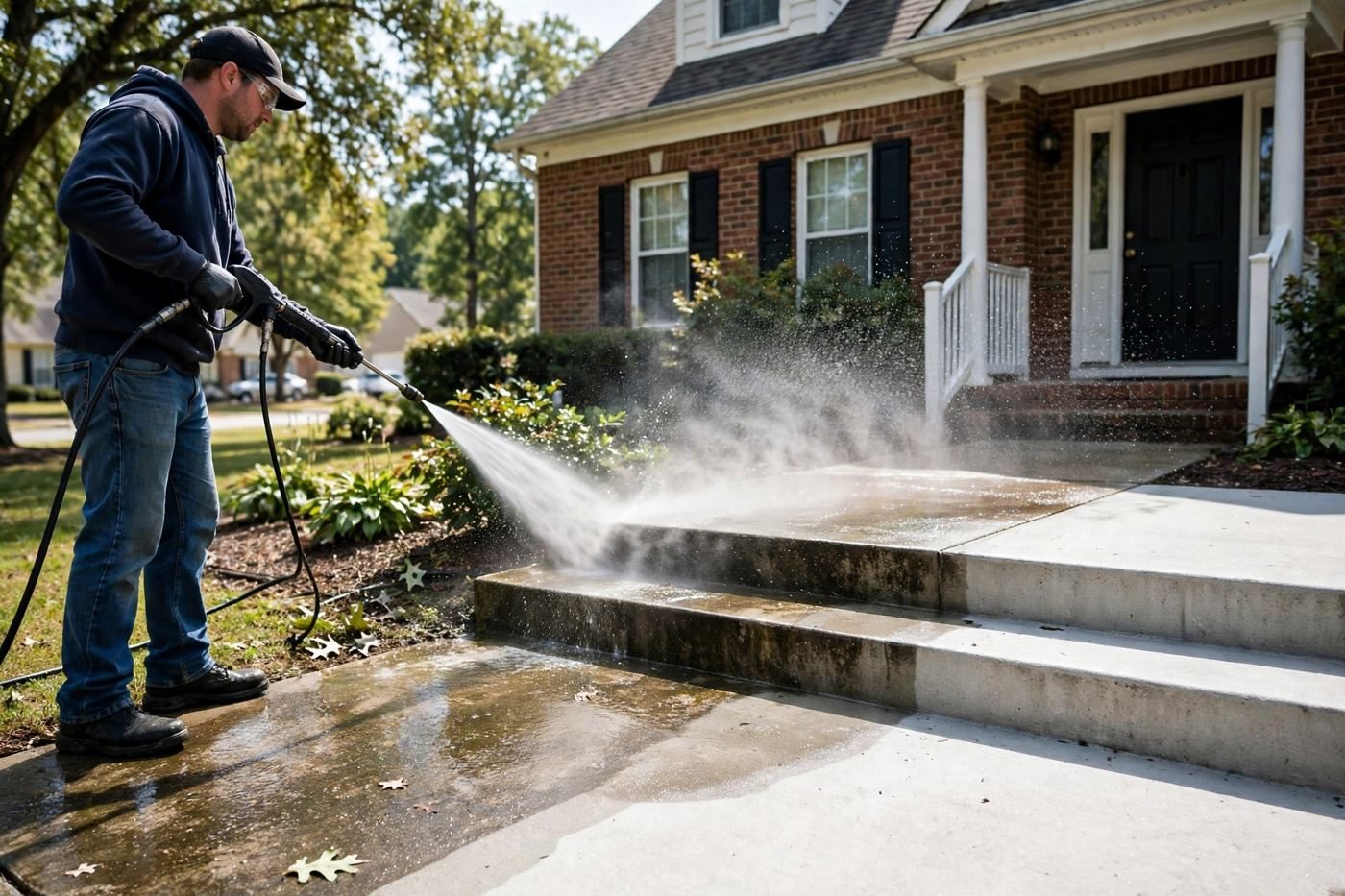
Sweep and rinse loose grit first. Apply the matched treatment — an algae treatment for green sections, an iron/clay treatment for orange, a degreaser worked with a stiff brush on oil — and let it dwell in shade, re-wetting rather than letting it dry. Then run a surface cleaner at moderate pressure, rinse thoroughly, and keep wash water out of storm drains: sweep or dam the flow so residue goes to lawn, not the creek system.
That is the same process behind our driveway and concrete cleaning service. The chemistry stays modest because the machine and the sequence do the work.
What to skip entirely
Skip muriatic acid unless you are trained for it, skip zero-degree tips anywhere near concrete you like, and skip washing in full midday sun — solutions flash-dry and bake in their own streaks, the problem our streaks guide explains.
When the driveway wins
If the concrete is large, sloped, oil-stained and shaded — the full Marietta combination — a professional visit costs less than the chemicals and rental you'd burn learning that. Ask for a free estimate and we'll say honestly whether yours is a Saturday job or a call-us job.
How Marietta conditions change the driveway job
Marietta concrete rarely fails for one reason. The same driveway can carry orange red-clay shadowing tracked in from the street, a green algae film where the oak canopy keeps it shaded and damp, and dark oil spotting where cars turn in — sometimes within a few feet of each other. That mix is why a single aggressive chemical disappoints: it may bleach the algae while leaving the iron in the clay untouched, and it can damage the planting beds that edge most Cobb County driveways while it does it.
Shade and slope matter as much as chemistry. North-facing and tree-covered concrete in neighborhoods like Indian Hills stays wet longer after summer thunderstorms, so algae returns faster there and a treatment step — not just a rinse — is what buys time between cleans. Sloped drives need the work sequenced from the top down so treated water does not run across finished sections, and runoff should be directed to lawn rather than the street: Cobb County storm drains lead to local creeks, including the Sope Creek system, and detergent or chemical residue does not belong in them.
Finally, timing protects the finish. Washing in full midday sun flash-dries solutions before they can dwell, baking in the very streaks homeowners then try to blast off. Early morning or a cloudy window, a matched treatment, a proper dwell and an even surface-cleaner pass will out-clean a stronger chemical used at noon — with no harsh products involved. When in doubt, test a small, inconspicuous square first and let it dry fully — concrete shows its true color dry, and a test patch settles the treatment choice before the whole drive is committed.
Frequently asked questions
Is bleach necessary to clean a Marietta driveway?
Usually not. Most Marietta stains — algae film, red-clay shadowing and pollen grime — respond to a matched mild treatment, dwell time and an even surface-cleaner pass. Bleach is the shortcut that risks planting beds and still leaves mineral clay staining behind.
Why does algae come back so quickly on shaded driveways?
Shade keeps concrete damp after rain and summer storms, and damp concrete is where algae film thrives. A treatment step that addresses the growth itself, rather than only blasting off the color, is what slows the return on canopy lots.
Where should driveway wash water go?
To lawn, not the street. Storm drains in Cobb County lead to local creeks, so sweep or dam the flow so residue soaks into grass instead of running untreated into the storm system.
Related reading
- Why Is My Pressure Washing Leaving Streaks on Marietta Driveways?
- Spring Cleaning Checklist for East Cobb Homes After Pollen Season
- Fall Gutter & Exterior Maintenance Checklist for Marietta Homeowners
- Driveway & Concrete Cleaning — the Resiclean service page for this topic
Sources
- Cobb County Government
- Georgia Environmental Protection Division (GA EPD)
- Cobb County–Marietta Water Authority — Annual Water Quality Information
Next step: get a free, firm estimate for your own home — call (770) 846-5651 or send the form. See what window cleaning costs in Marietta and what customers say.
Free estimates, owner-operated
Resiclean · 4669 S Landing Dr, Marietta, GA 30066 · Open 7 am–8 pm · 7 days a week
Call (770) 846-5651 →